Most assisted living tour questions people bring with them are about the building. Square footage, the dining room, the activity calendar, whether the hallways smell. Those get answered roughly the same way everywhere you go.
The questions that actually sort one community from another are about how the operator staffs, cooks and makes decisions. Every place you tour will tell you their care is personalized. Most of them mean someone will write a name on a whiteboard and ask about breakfast preferences. That is a nice gesture. It is not a care model.
The word has become industry wallpaper, which makes it useless as a filter unless you know what to press on. So press on it. Whether you are touring for your father, for your wife, or for yourself, the questions below separate communities built around one person at a time from communities that bolted the language onto a schedule they were already running.
On August 31, 2026, Senior Housing News published an interview with Sage Oak founder and CEO Loe Hornbuckle, drawn from the publication’s Transform podcast. Hornbuckle argued that personalization is the silver bullet
for serving the baby boomers now entering assisted living and memory care, and that operators who did not build for flexibility from the start will struggle to retrofit it.
His description of the commodity end of the market was blunt: an average price, an average service, an average resident. Boomers are not going to accept that arrangement quietly. This generation picked its own doctors, managed its own retirement accounts and chose its own neighborhoods. Handing the last chapter to a building that serves 140 people the same chicken at the same hour is not going to sit well.
That shift works in your favor. It means the questions below now have real answers at some communities around Colleyville and Grapevine, and you can find out very quickly which ones.
At Sage Oak we run a process we call Curated Care, which weighs acuity, cognitive stage, social temperament and interests before placing anyone in one of our residential homes. A community that places by bed availability will say so if you ask directly. Listen for whether anyone reviewed the actual person before answering.
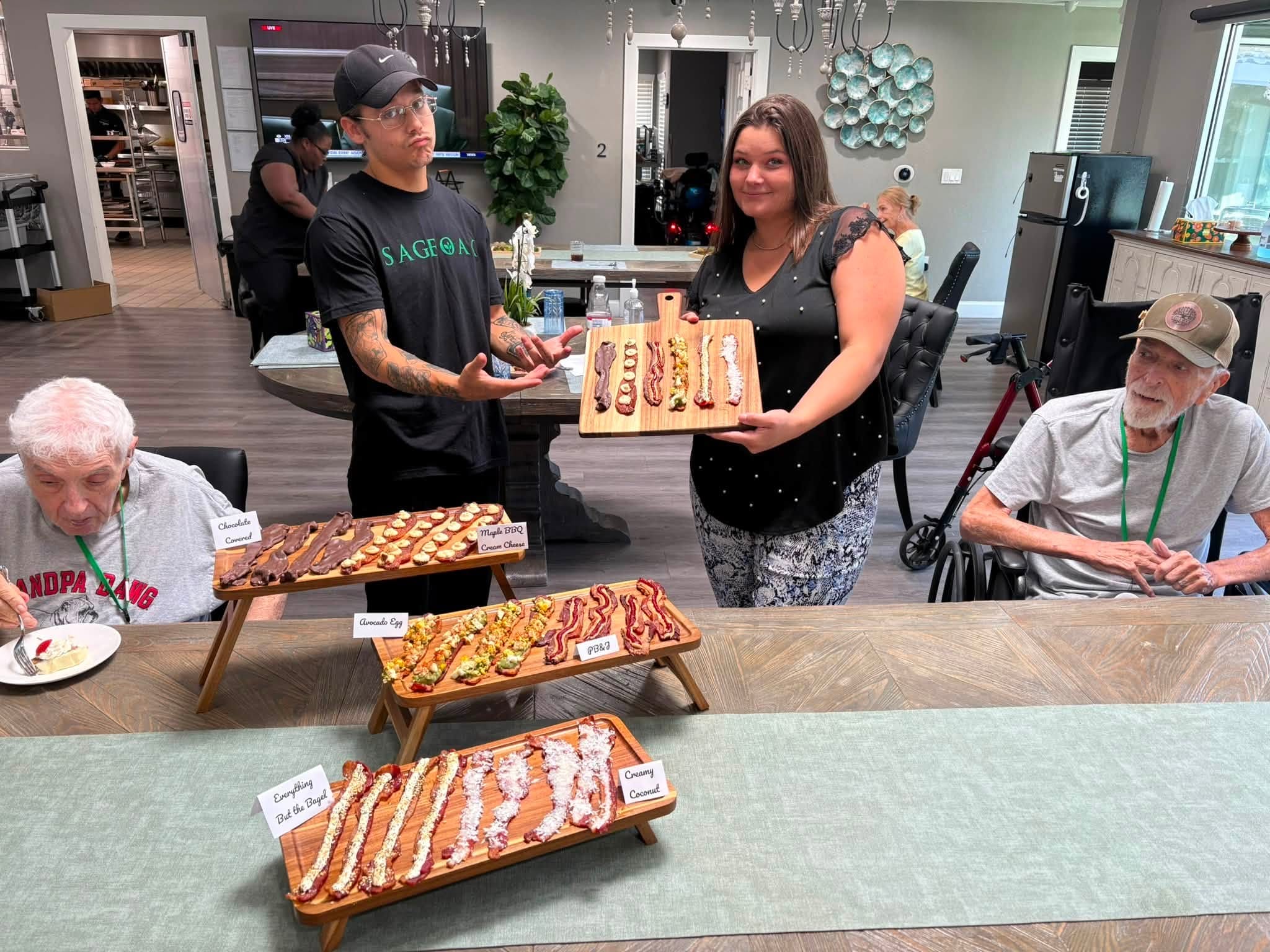
The answer tells you about the kitchen’s staffing more than its menu. “We can make a sandwich” and “our chef cooks to order and builds the week around what residents ask for” are two different businesses. If your husband has eaten the same breakfast for 30 years, find out now whether that survives the move.
Ask for both numbers. Ask what happens when someone calls out sick. Personalization is a staffing ratio before it is a philosophy, and a community running one aide for 20 residents cannot deliver it no matter what the brochure says.
Good operators expect the initial plan to be wrong in small ways and revise it. Ask who reassesses, how often, and whether the update arrives as a phone call or a form in a folder.
Get a name and a role, not a number.
Some communities discharge at the first sign of real care. Others admit everyone and blend residents with wildly different needs into the same room, which serves neither group. Ask where the line sits and what a move looks like if you cross it. This matters just as much when you are the one moving in, because you are choosing how much of your future you are handing to a policy you have not read.
Bingo at 10 a.m. on a printed template that has not changed since 2019 tells you what you need to know. So does a calendar with a woodworking session on it because one resident spent 40 years as a carpenter.
You are asking a different question than your children are. They want to know you will be safe. You want to know whether you will still be running your own day.
Ask what time you can eat breakfast, not what time breakfast is served. Ask whether you can keep your car, your standing Tuesday appointment, your dog. Ask what happens if you want to skip the group activity for a week. Ask who has a key to your room and under what circumstances they use it. A community that answers these easily has thought about autonomy. A community that redirects to the safety features has told you where it sits on the question.
You are also allowed to tour without your family. Some people find they get straighter answers that way.
Accommodation means a community will bend its standard program when you push hard enough. Customization means there was no standard program to bend. The first depends on how sympathetic the executive director feels that week. The second is built into how the operator staffs, cooks, places residents and writes care plans.
You can usually tell which one you are looking at within twenty minutes if you ask about staffing and food in the same conversation.
We operate small residential homes on Bransford Road rather than a single large building, clustered close enough together to share staff and clinical support. Fewer residents under one roof means a caregiver notices when someone is having an unusual morning, and a chef cooks for the people actually at the table. Hornbuckle’s argument in the Senior Housing News interview is the same one that shaped the company in 2015: build small and flexible from the beginning so you never have to reverse-engineer it later.
We are not the right fit for everyone, and we will tell you when we are not.
Ready to see how this works in practice? Schedule a tour or give us a call to get a sense of what your loved one needs and what it costs.