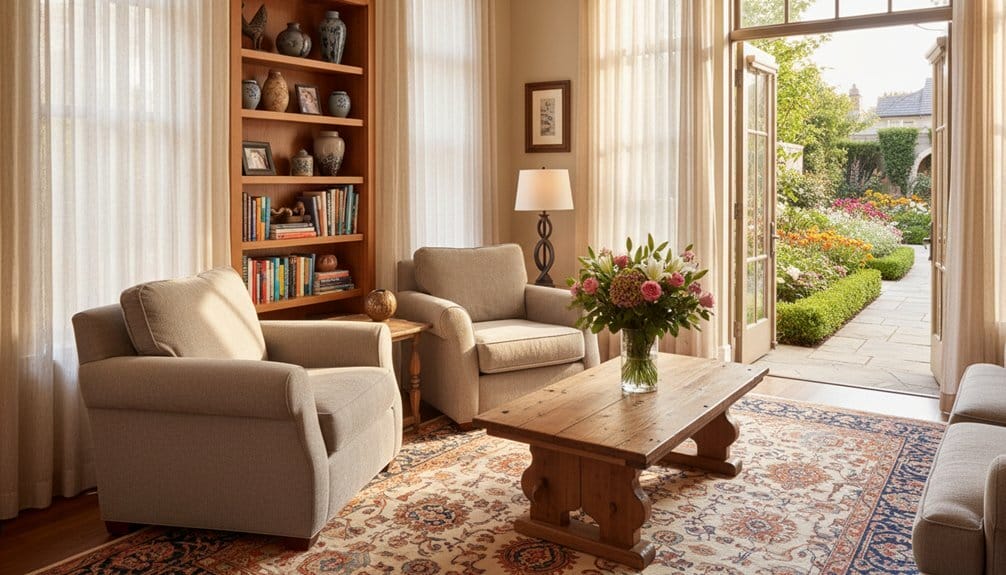
When you choose boutique assisted living, you’re getting staff-to-resident ratios of 1:4 compared to 1:8 or higher at large facilities. This means caregivers have time to build genuine relationships with your loved one and respond quickly to needs. Smaller communities of 5-20 residents offer home-cooked meals and personalized care plans, while large facilities provide more recreational amenities but less individual attention. Understanding these tradeoffs helps you find the right fit for your family’s priorities.
When you’re exploring assisted living options for a loved one, the size of the community can make a significant difference in their daily experience.
Boutique assisted living communities typically house 5-20 residents in converted residential homes that look and feel like regular houses. Your loved one enjoys private or shared rooms within a familiar, homelike setting. Large facilities, on the other hand, can accommodate 100 or more residents in institutional-style buildings designed for higher occupancy. With approximately 30,600 assisted living communities across the United States, families have many options to compare when searching for the right fit.
The living environment differs dramatically between these options. Smaller homes offer tranquil outdoor spaces, home-cooked meals, and consistent daily routines that reduce stress. Large facilities feature centralized dining services and activities spread across sprawling structures. When you’re caring for someone you love, these environmental details matter tremendously for their comfort and wellbeing.
Although the physical environment plays an essential role in your loved one’s comfort, the people providing daily care matter even more. Staff-to-resident ratios vary dramatically between facility types, directly affecting the attention your family member receives each day.
Large assisted living communities typically maintain ratios around 1:8 during day shifts, though some facilities stretch this to 1:20. Boutique facilities operate differently, keeping ratios between 1:4 and 1:5 caregivers per resident. This difference means staff in smaller homes can respond faster during emergencies and provide more personalized attention. Night shifts often have even higher ratios, sometimes reaching 1:15 in larger facilities, making boutique options particularly valuable for residents who need overnight assistance.
Better ratios also reduce caregiver burnout and turnover. When staff aren’t overwhelmed, they build genuine relationships with residents. Your loved one benefits from consistent faces who understand their preferences, habits, and needs—creating trust that improves both safety and emotional wellbeing.
Because every senior arrives with their own health history, personal preferences, and daily habits, the approach to care planning can make a dramatic difference in quality of life.
Boutique senior living communities focus on understanding each resident as an individual. Staff members assess specific medical, emotional, and social needs rather than applying standardized protocols. This personalized evaluation builds trust and helps identify requirements that might otherwise go unnoticed.
Consider that assisted living residents average 5.8 chronic conditions, with over half managing six or more health challenges simultaneously. A customized care plan addresses how these conditions interact, not just each one separately. This holistic approach to wellness nourishes body, mind, and soul through enriching experiences that go beyond basic medical management.
When you’re helping a loved one find the right community, look for places where care plans incorporate their values and lifestyle preferences—and where staff regularly adjust those plans as needs change.
Beyond personalized care plans, the day-to-day experience of assisted living depends heavily on what amenities and services a community provides.
Large facilities often feature impressive recreational options like fitness centers, swimming pools, spas, and movie theaters. You’ll find dining halls serving hundreds of residents with standardized menus and set meal times. These communities employ dedicated activity directors who organize extensive social programming for their diverse populations.
Boutique communities take a different approach. Instead of extensive amenities, you’ll discover gourmet dining prepared by professional chefs in intimate, family-style settings. These smaller homes accommodate personalized dietary needs more flexibly. With only 10 to 50 residents, activities can be tailored to your loved one’s specific interests rather than designed for large groups. The atmosphere feels more like a residential neighborhood than an institution. Residents also benefit from 24/7 monitoring and emergency response systems that ensure their security while maintaining the home-like environment.
Understanding the daily experience matters, but let’s be honest—cost plays a major role in your decision.
Traditional assisted living averages $4,900 to $9,500 monthly, while boutique facilities range from $10,000 to $15,000 or more. That’s a significant difference you’ll want to understand before committing.
Here’s what drives boutique pricing: higher staff-to-resident ratios mean better care but increased payroll costs. Luxury amenities like gourmet dining and spa services add operational expenses that transfer to your monthly bill.
However, smaller residential care homes often cost roughly half what large nursing facilities charge—around $5,350 compared to $9,034 for private rooms. These intimate settings maintain lower overhead through reduced building maintenance and simplified administration. Filling vacancies is also easier at the lower price point, helping these smaller homes maintain consistent occupancy.
When you’re caring for someone you love, understanding where your money goes helps you make the best choice.
Boutique facilities typically offer faster emergency response times because you’ll find higher staff-to-resident ratios and caregivers who know each resident’s health history intimately, enabling more personalized and immediate medical attention during crises.
You’ll likely need to transfer your loved one to a larger facility with specialized medical staff and services. This shift can disrupt meaningful relationships they’ve built, so you’ll want to plan carefully for their emotional well-being.
You’ll often find boutique communities offer more flexible visitation because smaller settings can accommodate your schedule without disrupting large-scale operations. This means you can visit your loved one when it works best for both of you.
You’ll find that both boutique and large assisted living facilities must meet the same state licensing standards. The key differences often involve staffing ratios and inspection protocols, which you should verify with your state’s regulatory agency.
You’ll find wait times vary widely—from weeks to over 180 days—regardless of facility size. Factors like location, care needs, and current occupancy matter most. Ask facilities directly about their admission timelines when exploring options.